
Arrest Warrants in Talbot County
An arrest warrant lets law enforcement take someone into custody on a criminal charge. Maryland does not hand these out casually. A probable-cause determination comes first, and more than one door leads there. A police officer can file a statement of charges. A prosecutor can take a case to a grand jury. However the application starts, a judicial officer makes the final call on whether the person gets a summons or a warrant. In Talbot County, the charge also decides the courtroom. District Court handles misdemeanors, certain felonies, and the first steps of a criminal case. Serious felony prosecutions belong to Circuit Court, and the Circuit Clerk keeps those files.
Talbot County Arrest Warrant Applications
In Talbot County, warrant applications go to a District Court commissioner. The commissioner reads the facts and decides whether probable cause exists. Maryland's criminal procedure statute spells out when a commissioner may issue a warrant: after a served summons or citation, when whereabouts are unknown, when the person is already in custody, or when there is danger. Keep the roles straight. A commissioner is a judicial officer, not a trial judge and not a clerk. A judge assigned to the case can still issue or recall process later. People often assume the Sheriff's Office picks who gets a warrant. It does not. The Sheriff serves what the court issues. Note: The application and its supporting affidavit may be sealed, so the public record can show the case while the paperwork behind it stays hidden.
What a Talbot County Arrest Warrant Contains
A Talbot County warrant is a court document, not a public web page, and it may stay restricted while it sits unserved. What a reader usually finds is the case record built around it. A few fields tell the story.
| Case Number | The court's identifier, with or without dashes, plus the TS number if a sheriff record exists. |
|---|---|
| Defendant and Caption | The person charged and the case caption, typically shown as the State against the defendant. |
| Charge | The offense or offenses named in the charging document, as the court records them. |
| Issuing Authority | The commissioner or judge who made the probable-cause determination. |
| Court | District Court of Maryland, Talbot County or Circuit Court for Talbot County. |
| Bond or Release Status | Set after the arrest, at the commissioner or court stage, not on the warrant itself. |
How Search Warrants Differ in Talbot County
Search warrants come up in the same Talbot County conversations, but they belong to a different category entirely. This one authorizes a search of a person, a place, or a thing. Maryland demands a written, sworn application laying out probable cause, and a judge may seal the affidavit for good cause. Criminal Procedure §1-203 sets out those rules. A search warrant is not something a person self-checks, and no public lookup answers that question. Getting the document means using the authorized court or records route, or going through counsel.
How Talbot County Arrest Warrants Are Served
Serving a warrant is agency work, not court work. In Talbot County, that job falls to the Sheriff's Patrol Division, which also handles court security, service of court orders, and traffic enforcement across roughly 477 square miles with about 25 sworn members.
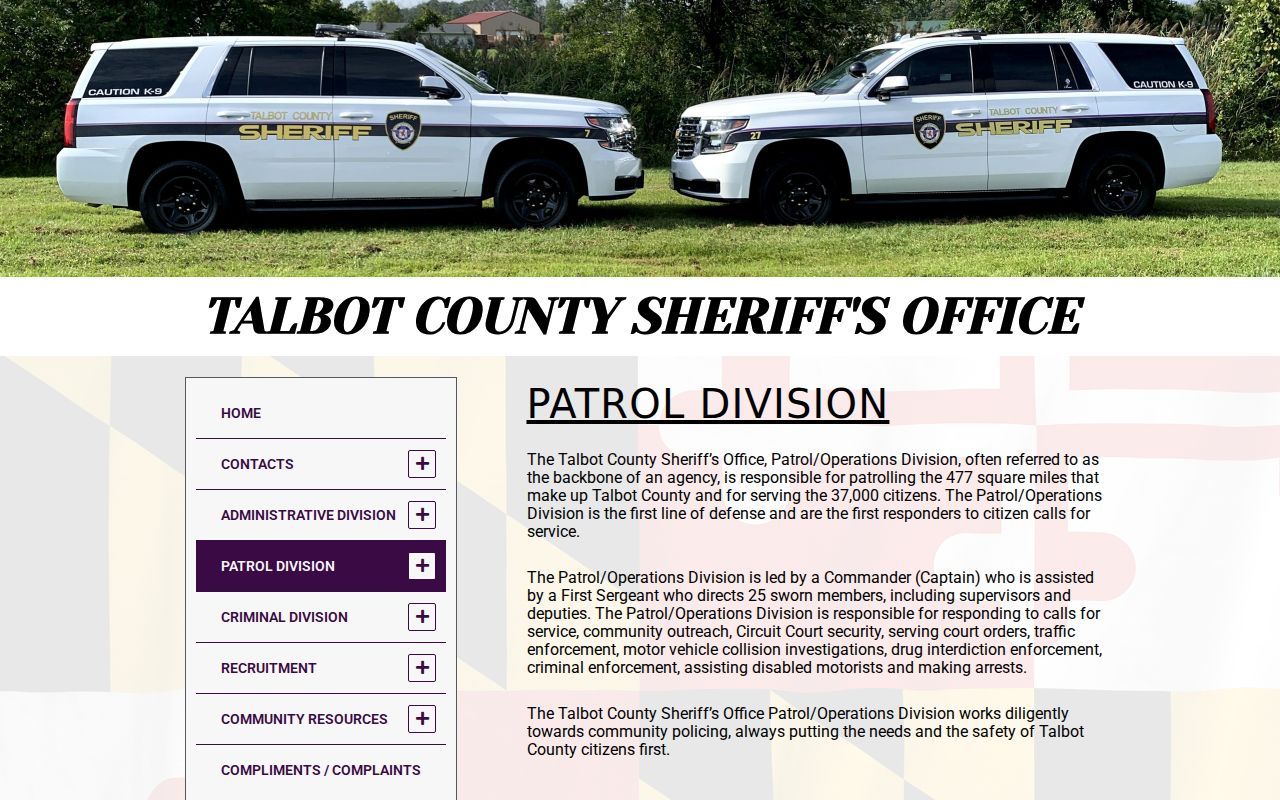
Court security, civil service, and criminal arrests all flow through that one division, so its phone line is not a warrant-status desk. Other agencies serve process in Talbot County too. The Maryland State Police Easton Barrack covers Talbot, Caroline, and Dorchester counties and takes the state-police cases.
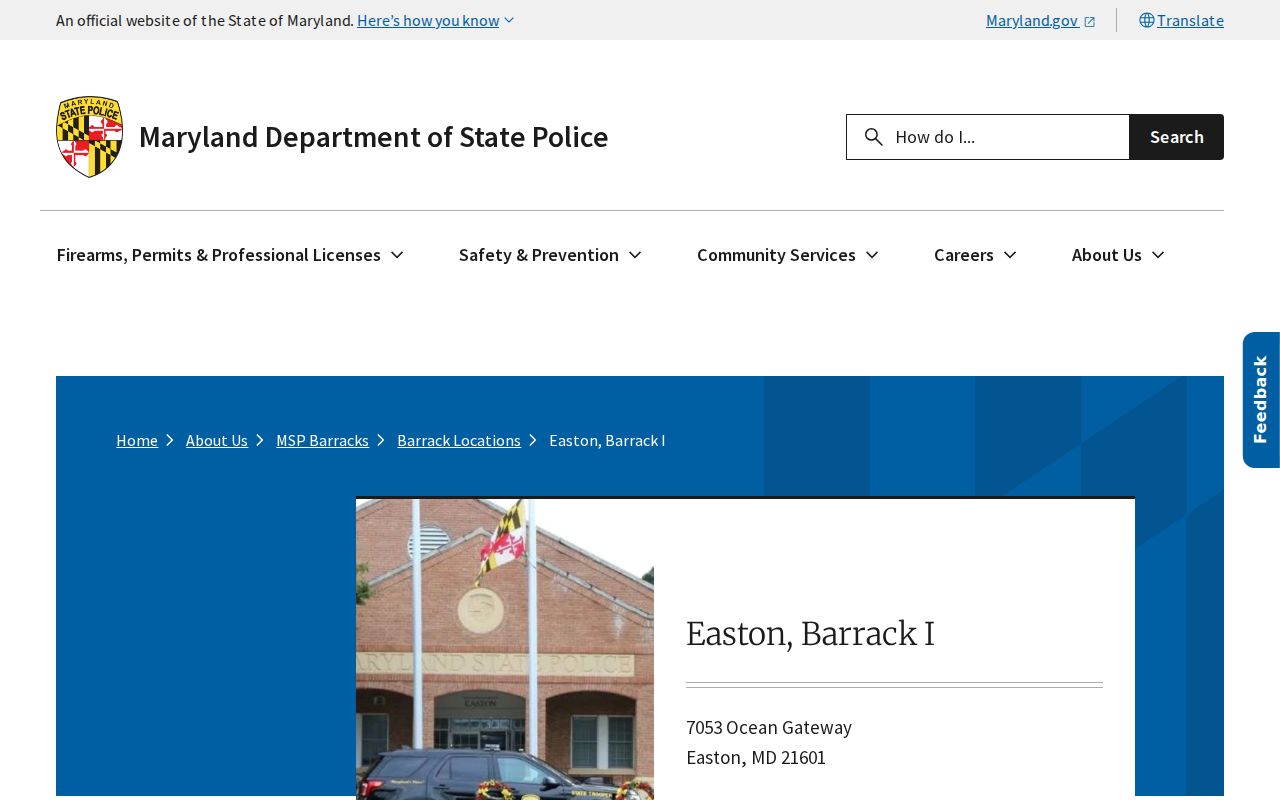
For a Talbot County matter that belongs to state police, call the barrack at 410-822-3101 rather than the Sheriff's records desk.
Talbot County Warrant Arrests and Rule 4-212
Maryland's criminal rules govern what happens after a warrant arrest. The person is told the charges and the process, gets a copy promptly, and goes before a judicial officer. District Court timing generally runs within 24 hours where those rules apply. Circuit Court defendants appear at the appropriate judicial session. At that first appearance, a commissioner weighs probable cause, the charges, counsel, and release or bail. The options can include personal recognizance, an unsecured personal bond, a cash bond, property bail, or a professional bond. None of it can be predicted from a Talbot County warrant alone.
Arrest Warrant vs Summons vs Bench Warrant
A summons, an arrest warrant, and a bench warrant are not the same thing in Talbot County, and the difference shapes what a person should do next.
| Process | What It Does | Typical Response |
|---|---|---|
| Arrest warrant | Authorizes taking a person into custody on a charge | Counsel, a surrender plan, and a commissioner release decision |
| Summons | Orders a person to appear in court without an arrest | Appear on the date shown, with counsel if the charge is serious |
| Bench warrant | Addresses a failure to appear or a court-compliance problem | A hearing request, motion, or appearance before the issuing court |
A single Talbot County docket can hold more than one of these before the case ends. Read the entries in order.
Talbot County Warrants and Federal Cases
Federal process never shows up in Maryland's state case search. A no-result there does not clear a federal warrant. The U.S. District Court for the District of Maryland is the federal trial court, sitting in Baltimore, Greenbelt, and Salisbury. Federal dockets run through PACER, and the free CourtListener RECAP collection supplements it. Sealed indictments, sealed affidavits, and unexecuted federal warrants may appear in neither one. The U.S. Marshals Service District of Maryland counts Talbot County in its territory and handles federal fugitive and transport work.
What to Do If There Is a Warrant for You
Talk to a lawyer before you make a single move. An attorney can call the issuing court, confirm whether the paper is a summons or a warrant, and set up a lawful appearance or surrender plan for a Talbot County case.
Important: Do not drive on a suspended license or assume a walk-in will be accepted. Call the court and the commissioner station at 410-770-6720 first.
Worried about cost? Maryland's Public Defender eligibility line is 1-833-453-9799. Have the case number, the court, and any paperwork ready, and see the county overview for the full steps for handling a warrant in Talbot County.
Talbot County Warrant Arrests at Central Booking
Central booking for Talbot County happens at the Detention Center, 115 W Dover Street, which also hosts the commissioner station. The building dates to 1992. It holds roughly 80 people on an average day. Commissioners work around the clock for new arrestees, officers, and the public. The station's number is 410-770-6720. Corrections answers at 410-770-8120, and a call ahead is wise, since Talbot County publishes no walk-in surrender procedure for an active warrant. Let a lawyer time any planned arrest or surrender.